Discipline is self-respect on hard days
Until ten years ago, the word discipline wasn’t part of my vocabulary. I could have told you what it meant, sure — but I had no idea how to apply it to my own life.
Ten years ago, I was 26, and I had no clear vision of where I was going. I didn’t know what I wanted to do for a living, where I wanted to live, or even how I wanted to live. I was clueless — coasting, with no real thought about how I could improve myself or my life.
On paper, it probably looked like I had it together. I was living in West London with my girlfriend, working in central London, fronting a respected hardcore punk band. From the outside, it looked like I knew exactly who I was and where I was headed.
That couldn’t have been further from the truth.
The plan was for me to move to London and go to university. Well, that was someone’s plan but not mine. I went along with the whole go to university charade I wanted to carry on doing what I’d always done up until this point in my adult life. Work my dead-end retail job, earn enough money to pay rent and burn the rest on getting fucked up and playing shows in my band. I didn’t really want to go to university. I didn’t believe I had the intelligence or the work ethic to get a degree.
I left school with no qualifications. I was the stereotypical class clown — everything was a joke. I had no respect for the teachers, the school, or education itself. As far as I was concerned, I didn’t need “educating.” I knew everything.
I didn’t even turn up to some of my exams. Sitting in a hall for hours answering questions I didn’t know the answers to? Fuck that. One moment sums it up perfectly: an English presentation on Shakespeare. I’d been dreading it for weeks. I was deeply insecure, anxious, heavily dyslexic, and a poor reader — public speaking felt impossible. Instead of admitting that, I just didn’t show up. I waited for the lunch bell and disappeared. Another qualification gone.
Results day was grim. I knew what was coming; my parents didn’t. I compared my results with my friends and didn’t come off well. One of my closest mates — someone I messed about with in every class — walked away with ten GCSEs. I couldn’t understand it. We’d planned the same future: skateboarding, drinking, being legends. Education was for conformists.
Well… not for me, it turned out.
For the next ten years, I drifted through life with no ambition and no discipline.
Do you know what I was most excited about when I turned 18? For most people, it’s a big deal, right? You’ve made it to adulthood. You can be your own person. Drink legally. Go to university. Drive a car. Get a tattoo. Have adult relationships. Get your own place. The world is your oyster and all that shit.
I was most excited about being able to sign on the dole, so I could get free money from the government and drink my youth away. I felt rich. I’d never had money before, so the meagre £50 a week made me feel like a millionaire. Why try to be better when you can drink beer all day, every day?
Discipline entered my life in the most unexpected way.
I was at a low point — a 26-year-old who had just moved to London — deep down I knew I needed to change the trajectory of my life. Believe it or not, Prince Harry was the catalyst. A member of the fucking establishment. The very people I despised. I saw an advert on the Tube for Heads Together, a mental health charity being championed by His Royal Highness. Harry was the face of a campaign to end the stigma around mental health — essentially an effort to raise money and start conversations. That advert woke something inside me.
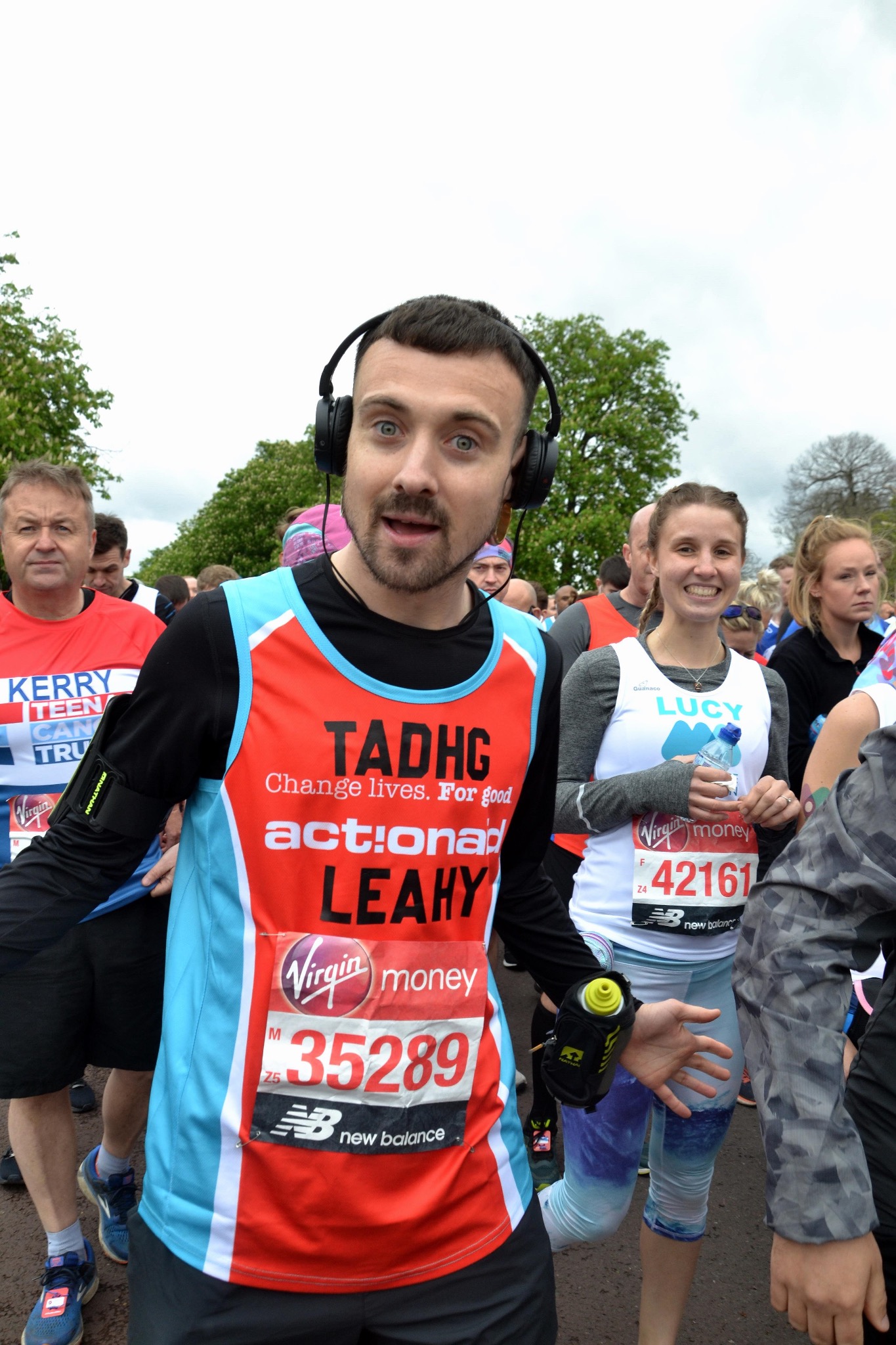
I was determined to raise a serious amount of money for charity and run the London Marathon. By hook or by crook. This was my chance to do something worthwhile with my selfish existence. Somehow, I got a charity place without going through the ballot. I’m convinced the universe stepped in for me. I had six months to get myself fit enough to complete 26.2 miles — and the small matter of raising £2,000. Well, I did it. I raised £2,000 for ActionAid and completed the London Marathon. It would be remiss of me not to acknowledge the help I received from friends and family along the way — I couldn’t have raised that money alone. A special mention goes to my long-suffering mother.
The race itself was unreal. Running through the streets of London, lined with thousands upon thousands of people, all cheering us on. Complete strangers shouting encouragement, calling my name. It was a powerful elixir — for a moment, I felt like a revered professional athlete. That illusion didn’t last long. The final six miles had other ideas, fuck they humbled me completely.
On that day in May, I truly understood the meaning of discipline — both viscerally and intellectually. It would be no exaggeration to say the London Marathon changed my life in a few ways. It was the first time in my life that I was consciously aware that if I wanted something badly enough, I could achieve it. Ten years on, I still run religiously, at least four times a week. In short, my definition of the word discipline is showing up for myself. Keeping the promises I make to myself. If I say I’m getting up at 6 and going for a run, then that’s what I do. No excuses.
I lead a disciplined life these days. I get up around the same time every morning. I eat the same breakfast. I protect my time. I spend time in nature every day. I have non-negotiable practices that keep my mental health in check. I don’t have much patience for small talk or pointless conversations. I’ll go out to see live music when I get the opportunity — otherwise, my nights are quiet. I don’t drink alcohol, I don’t take drugs, and I don’t eat the rotting flesh of dead animals.
That discipline doesn’t come easily. Routine is a constant battle for me. As an autistic adult living alone, I have no one to answer to but myself. I know when I’m slipping. If something knocks me out of my routine, it can derail my entire day. Anxiety creeps in. Irritability follows. Frustration. A sense of helplessness. Once I’m there, it’s hard to pull myself back.
But I never give up. And that, more than anything, is what matters.
Post a comment